



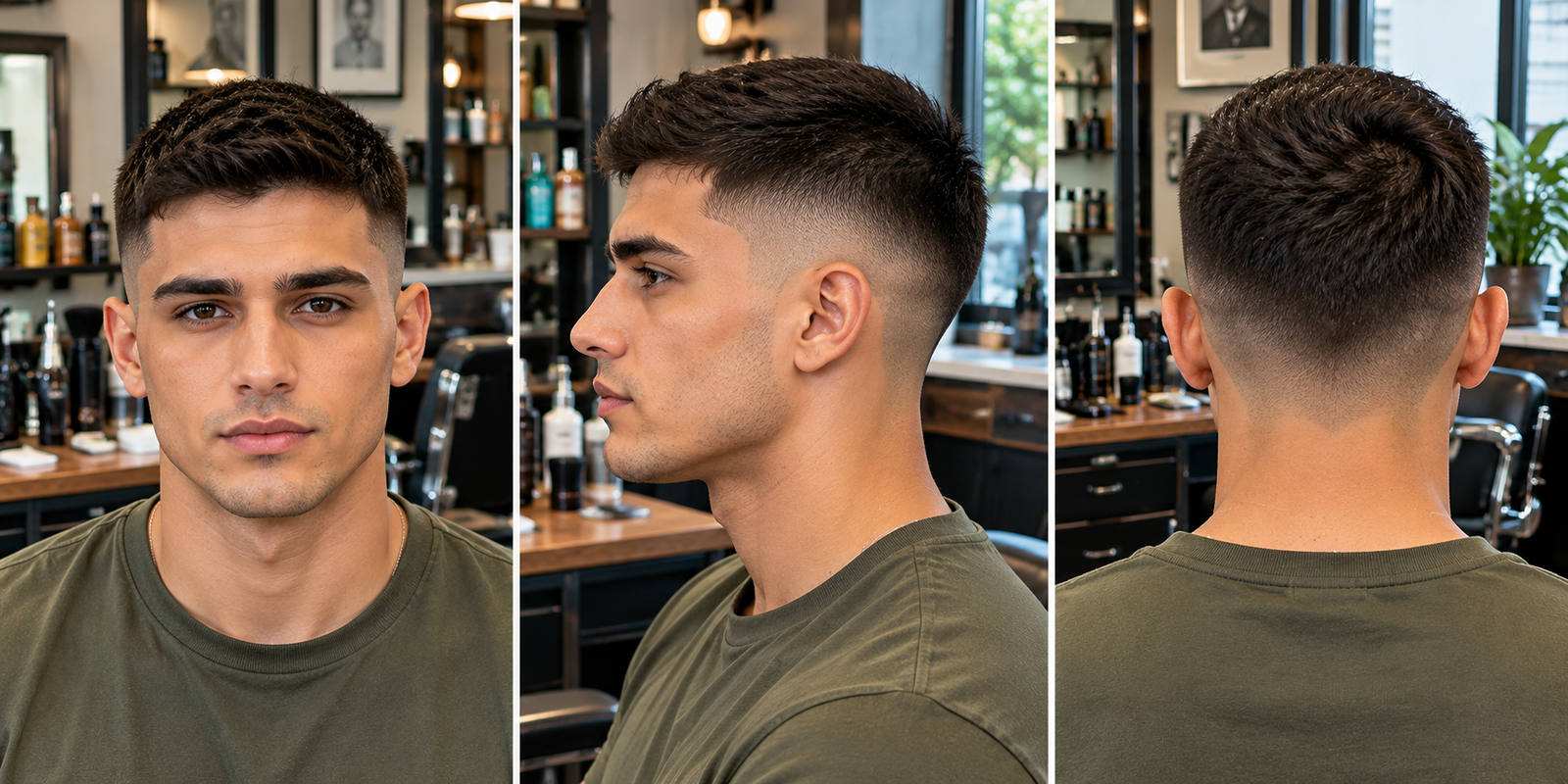
Army hair style usually means a short, tidy cut built around easy maintenance and a controlled shape. But a buzz cut, crew cut, regulation cut and high and tight do not look the same. Current search results are strongly photo-led, so this guide explains what each style means and what to ask for.
What Defines an Army Hair Style
A military look uses short sides, controlled top length, clean edges and little daily styling. Standards differ by country, service and policy.
For civilians, “army” or “fauji” haircut usually means a military-inspired look, not automatically an approved service cut.

15 Army and Military Haircut Styles
- Buzz Cut: Very short hair clipped evenly or close to one length.
- Induction Cut: An extremely short recruit-style cut closely related to the buzz cut.
- Crew Cut: Short sides with a longer top, giving more shape than a buzz.
- Regulation Cut: A traditional style with a partable top and tapered sides and back.
- High and Tight: Very short sides and back with a short top and strong contrast.
- High and Tight Recon: A more extreme version with a narrower longer section.
- Flat Top: A level, squared top with short sides.
- Brush Cut: A short top brushed or cut upward or forward.
- Butch Cut: Short, fairly even clipper-cut hair across the head.
- Burr Cut: A very short clipper cut that leaves slight visible texture.
- Ivy League: A longer crew-cut variation with enough top length for a neat part.
- Taper Cut: Sides and neckline gradually shorten without a dramatic fade.
- Military Fade: A civilian military-inspired cut using a fade with a short top.
- Short Military Crop: Short sides with a compact, textured top.
- Military Fade with Beard: A civilian combination of a short fade and neatly groomed beard.
These names and variations appear across current military haircut guides, but naming does not mean every version is an official service standard.
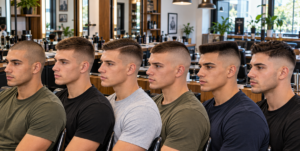
Army Hair Style Differences at a Glance
| Style | Top length | Sides | Maintenance | Look |
|---|---|---|---|---|
| Buzz | Very short | Very short/even | Very low | Minimal |
| Crew | Short | Short | Low | Classic |
| Regulation | Short-medium | Tapered | Low-moderate | Traditional |
| Induction | Extremely short | Extremely short | Very low | Recruit-inspired |
| High and tight | Short | Very close/high | Moderate | Sharp |
| Flat top | Short/level | Very short | Moderate | Structured |
| Taper/fade | Short | Graduated | Moderate | Modern |
How to Choose Your Cut
Start with your hair type. Thick, straight hair can hold a crew, brush or flat-top shape well. Fine hair may look cleaner with a buzz, burr or shorter crew. Wavy or curly hair can work too, but the barber should follow the natural texture instead of forcing a perfectly flat finish.
Then consider head and face shape. A very short buzz exposes the head closely, so uneven contours can become more visible. A crew or regulation cut leaves more room for balance. A high and tight puts extra attention on the temples and facial structure.
For boys and young men, a short crew, taper or buzz can be easy to manage for school, sports and routines. A sharp fade also loses its shape faster than an all-over buzz.

What to Tell Your Barber
“Give me an army cut” is too vague. Show a reference photo, ideally front, side and back, then explain:
- top length
- side and back length
- taper, fade or near-skin finish
- where the fade should start
- whether the top should be flat, textured, brushed or parted
- the neckline finish
Photo references reduce confusion because names such as “army cut” and “military fade” can vary between shops.

Military Rules vs Civilian Cuts
A military-looking haircut is not automatically service-compliant. Grooming standards differ between forces and can change. For example, current U.S. Army guidance specifies a blended taper or fade for male hair and limits excessive bulk, which shows why a haircut name alone is not a universal rule.
For the Indian Army or another specific service, check the current official grooming instructions before treating any measurement or named cut as a requirement. A barber’s “fauji cut” may simply be a civilian interpretation.
Maintenance and Trimming
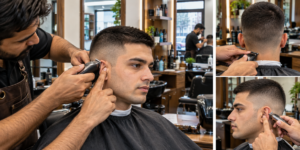
Keep the sides, neckline and area around the ears tidy, and trim before the shape grows out. Very short fades and high-and-tight styles usually need more frequent clean-ups than buzz or crew cuts.
At home, use the same clipper guard pattern your barber uses. Avoid changing the cut just before an important event or service inspection.
Conclusion
The right army hair style depends on hair type, face shape, desired length and how often you want a trim. Pick the style by its actual shape, not just its name, and take clear reference photos to the barber. For genuine military use, always follow the current rules of the relevant service.
