




Dandruff treatment at home can start with a simple scalp-care routine, but the right approach depends on what is causing the flakes and how severe they are. Mild dandruff can often be managed at home with regular washing and an appropriate anti-dandruff shampoo.
What Causes Dandruff?
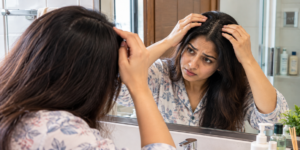
Dandruff causes flakes and itching, but it is not always the same as a dry scalp. Oil, hair-care habits and conditions such as seborrheic dermatitis can contribute to flaking. If the scalp is very red, painful, crusted or unusually inflamed, do not assume it is ordinary dandruff.
Before choosing a remedy, look at the pattern. Mild, occasional flakes may respond to better scalp care. Recurring or heavier dandruff may need a treatment shampoo rather than a kitchen remedy.
Dandruff Treatment at Home: Step-by-Step
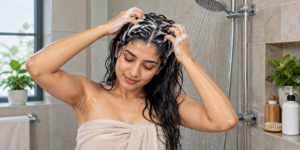
Start with a gentle routine. Wash your hair regularly and rinse the scalp thoroughly. If ordinary shampoo does not control the flakes, consider an anti-dandruff shampoo with an established active ingredient. The American Academy of Dermatology lists ingredients such as ketoconazole, selenium sulfide, salicylic acid, zinc pyrithione, sulfur and coal tar.
Apply the treatment shampoo to the scalp, not just the hair. Follow the bottle directions because contact time and frequency differ between products and hair types. Some formulas need to remain on the scalp for several minutes before rinsing.
Do not scratch hard or scrub flakes aggressively. If a product causes burning, stinging or increased itching, stop using it.
Natural Remedies: What to Know
Home remedies are common in India, including aloe vera, neem, coconut oil, yoghurt and diluted tea tree oil. They may be used as supportive scalp care, but they should not automatically be treated as proven dandruff cures.
Tea tree oil deserves extra caution. Mayo Clinic notes that strong evidence for tea tree oil treating dandruff is lacking, and it can cause allergic reactions in some people.
Avoid assuming that a stronger DIY mixture will work better. Irritating ingredients can make an already sensitive scalp more uncomfortable. Patch testing and stopping any remedy that causes irritation are sensible precautions.

How to Choose an Anti-Dandruff Shampoo
Choosing by the active ingredient is more useful than choosing only by brand name. Use this quick guide:
| Ingredient | Main role | What to consider |
|---|---|---|
| Ketoconazole | Helps control dandruff linked to yeast/fungal activity | Useful option when recurring dandruff needs targeted treatment |
| Selenium sulfide | Helps reduce scalp flaking and yeast activity | Follow the product directions carefully |
| Salicylic acid | Helps loosen and remove scales | May be drying for some scalps |
| Zinc pyrithione | Helps control dandruff and flaking | Check the current product label and directions |
| Coal tar | Helps slow excessive scaling | Can increase sun sensitivity |
Different shampoos work differently, and one product may not suit everyone. If one does not help, a different active ingredient may be worth discussing with a pharmacist or dermatologist.

When to See a Dermatologist
Home care is reasonable for mild dandruff, but persistent or severe symptoms deserve medical attention. See a dermatologist if dandruff does not improve after using an appropriate treatment, or if you have marked redness, swelling, pain, significant hair loss, or symptoms that keep returning.
Dandruff-like flaking can overlap with seborrheic dermatitis, psoriasis, eczema or scalp infections, so persistent symptoms may need a proper examination.
How to Prevent Dandruff From Coming Back
Once flakes improve, keep a routine that your scalp tolerates. Regular washing can help control oil and buildup, while styling products should be used thoughtfully if they leave heavy residue. Some people also continue an anti-dandruff shampoo less often for maintenance, following the product directions.

Conclusion
The most useful dandruff treatment at home is usually a simple, consistent routine rather than a long list of DIY recipes. Start with regular scalp care, choose an anti-dandruff shampoo by its active ingredient when needed, and use it exactly as directed. Natural options may offer supportive care, but do not rely on them as a guaranteed cure. If symptoms are persistent, severe or unusual, professional advice is the safer next step.
