



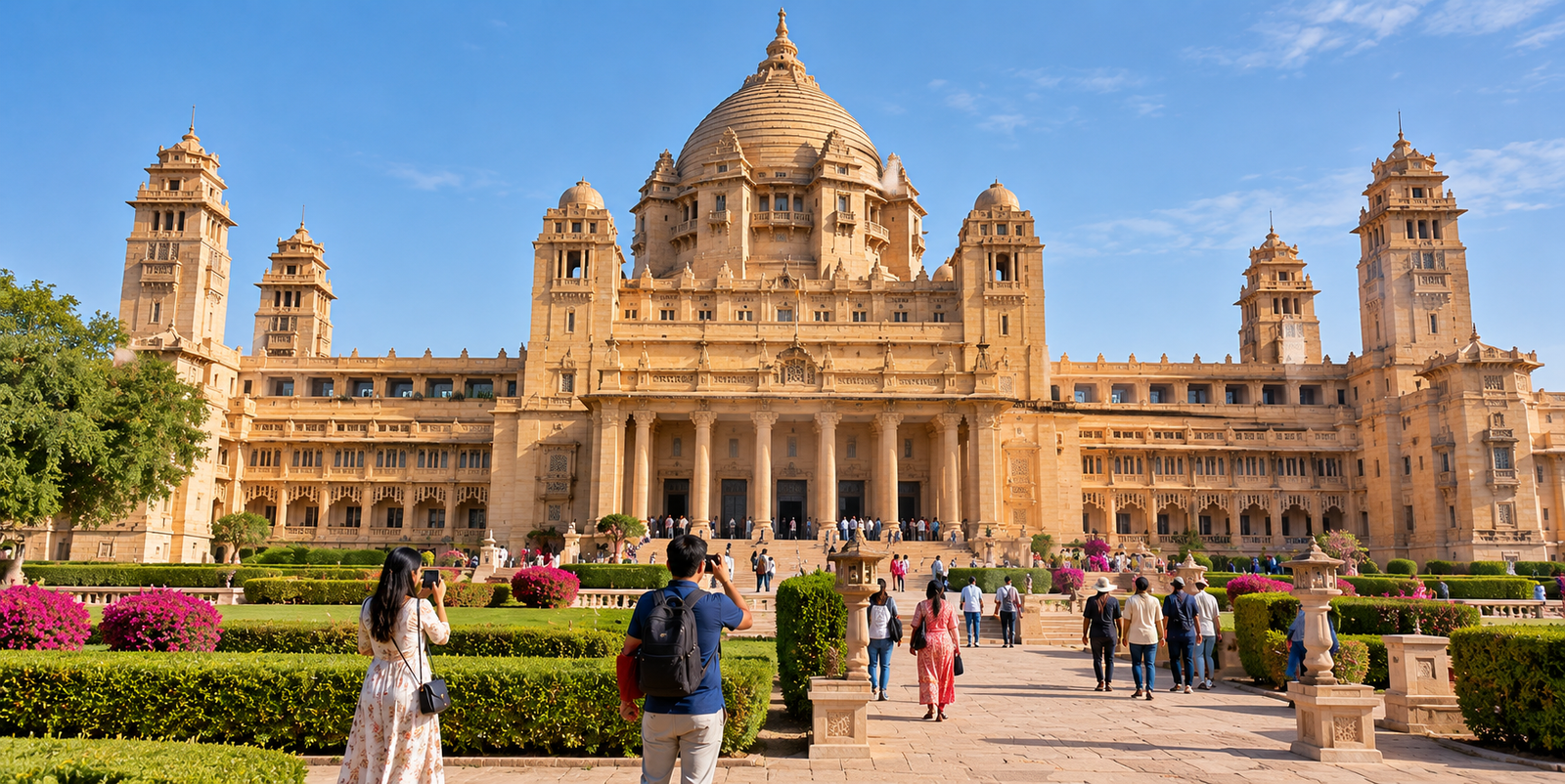
Jodhpur Palace usually points travelers toward Umaid Bhawan Palace, the grand 20th-century palace on Chittar Hill. It has three distinct identities: museum, heritage hotel and royal residence.
What Is Jodhpur Palace?
“Jodhpur Palace” usually refers to Umaid Bhawan Palace. Maharaja Umaid Singh commissioned it during a period of drought and famine. Construction began in 1928 and the palace was completed in 1943; the project also created employment during the crisis.
Today, it contains a museum, a Taj-operated hotel and a private royal home.
History and Architecture of Umaid Bhawan Palace
British architect Henry Vaughan Lanchester designed the palace, combining Indo-Saracenic, Classical Revival and Art Deco influences. Golden Chittar sandstone, marble, geometric details and monumental halls give it a distinctive character. Rajasthan Tourism notes that stone from Chittar Hill was used, leading to its historic name, Chittar Palace.
The central dome, symmetrical wings, courtyards and gardens define the exterior, while the interiors reveal the Indian-European mix.
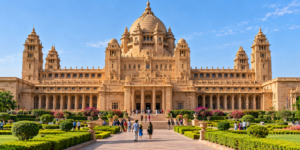
Inside Jodhpur Palace: Museum, Hotel and Royal Residence
The easiest way to understand Umaid Bhawan Palace is to separate its three roles.
| Section | What it means for travelers |
|---|---|
| Museum | Public-facing displays about the royal family and palace history |
| Hotel | Luxury Taj accommodation inside part of the palace complex |
| Royal residence | Private area used by the Jodhpur royal family |
The Museum
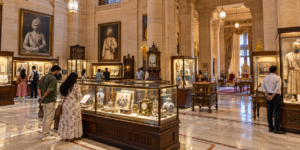
The museum is the most straightforward option for a sightseeing visitor. Its displays cover the 20th-century history of the Jodhpur royal family and the making of Umaid Bhawan Palace. Visitors can see royal memorabilia, clocks, porcelain, furniture, photographs, trophies and objects connected with palace life. Museum records also describe displays on palace construction and lifestyle in the 1940s and 1950s.
Current museum-directory information lists daily opening from 10:00 a.m. to 4:30 p.m., with separate admission for Indian and foreign visitors. Timings and fees can change, so confirm the latest information before travel.
The Hotel
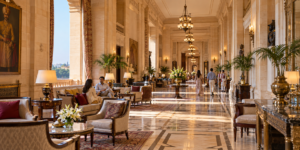
The hotel section is a different experience. Operated by Taj Hotels, it offers rooms and suites within the palace setting, along with dining, gardens and wellness facilities. Taj currently lists 71 rooms and suites and describes Umaid Bhawan as an active palace hotel where royal family members live in their own wing.
A stay gives access to hospitality spaces and services unavailable on a normal sightseeing visit. It is an immersive heritage stay.
The Royal Residence
The third role is the one visitors should understand most clearly: Umaid Bhawan is still a working royal residence. Taj states that family members live in a separate wing, so tourists should not assume that every corridor, room or ceremonial space is publicly accessible.
Museum visitors explore the public collection; hotel guests use the areas and services available to them. Private residential areas remain private.
What Can Tourists Access?
For most travelers, the realistic visit is the museum plus publicly viewable exterior and surroundings. Access to hotel interiors and facilities depends on being a guest, attending an approved event or having another valid arrangement. Private royal spaces should be treated as off-limits unless explicitly opened for a public experience.
If your goal is history, choose the museum. If your goal is luxury and palace living, book the hotel. Treating a sightseeing ticket as a full-palace access pass can lead to disappointment.
Is It Worth Visiting?
Yes, for architecture and royal history. The museum suits budget travelers, while a hotel stay is a premium experience rather than a sightseeing necessity. Its appeal is seeing a palace that still serves several roles.
Nearby Jodhpur Attractions
Umaid Bhawan Palace can be combined with Mehrangarh Fort and Jaswant Thada, two of Jodhpur’s major heritage sights. Visit Umaid Bhawan earlier or later in the day, then spend the main sightseeing block around Mehrangarh Fort and Jaswant Thada.
The contrast is worthwhile: Umaid Bhawan represents a grand 20th-century palace, while the fort and cenotaph connect you more directly with Jodhpur’s older Marwar heritage.

Conclusion
Jodhpur Palace is best understood through Umaid Bhawan Palace’s three identities: museum, luxury heritage hotel and royal residence. For a normal tourist, the museum and designated public areas provide the clearest experience. A Taj stay offers much deeper access to the hospitality side, while the royal family’s private spaces remain separate. Plan around what you actually want to experience, and Umaid Bhawan Palace becomes much easier to appreciate.
