



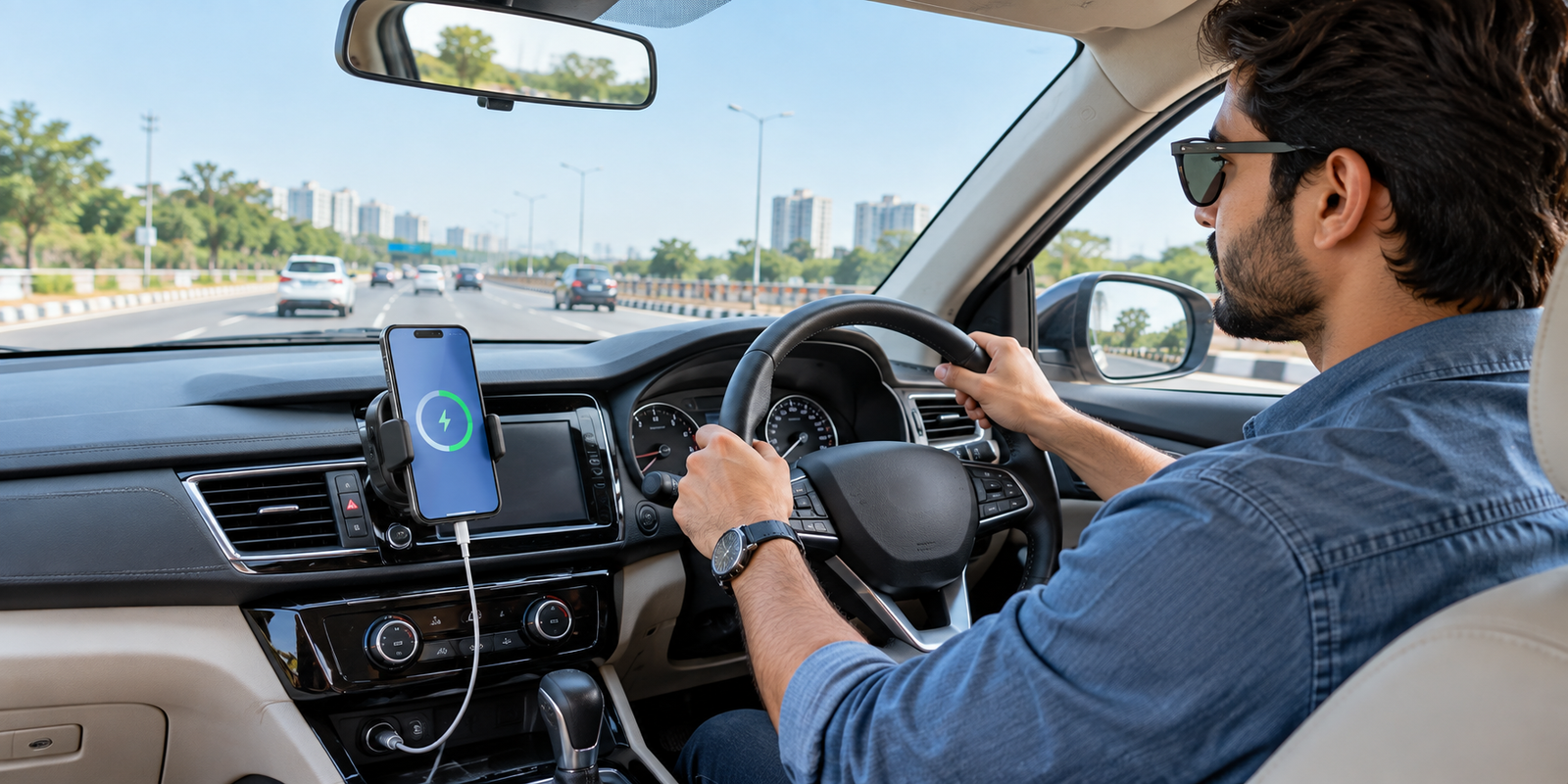
wireless charger for car in India can make daily driving easier when your phone is used for navigation, calls and music. But choosing one is not only about seeing “15W” or “25W” on the box. Your phone, charging standard, power adapter, mount and heat can all affect the result.
What to Know Before Buying a Wireless Charger for Car
A car wireless charger combines a phone holder with wireless power. The phone and charger need good coil alignment, while the mount needs to keep the device steady.
Qi is the main wireless charging standard you will see. Qi2 adds magnetic alignment for compatible phones and accessories. The Wireless Power Consortium recommends checking its certified product database when certification matters.
“Magnetic” does not automatically mean Qi2-certified. Check the actual standard and certification information from the manufacturer.

Will It Work With Your Phone?
Compatibility should come before price. iPhone 8 and later support Qi-certified wireless charging. Apple also notes that thick, metal or battery cases can reduce charging performance.
Android support varies by model. Google says Pixel 10 and later, excluding Pixel 10a, support Qi2. Samsung also offers Qi2-certified magnetic charging accessories for compatible Galaxy phones.
For Android, check whether the phone supports wireless charging, whether it supports Qi2, and whether the case works with the magnetic connection. When magnetic compatibility is uncertain, a physical clamp is often the simpler route.

15W vs 25W: What Will You Actually Get?
A higher number on the charger does not guarantee the same power reaches your phone. Usable speed depends on the phone, charger, wireless standard and power source working together.
Qi2 is associated with up to 15W, while Qi2 25W products are now available. Samsung’s current Galaxy Magnetic 25W Wireless Charger is specified for Qi2.2 25W charging and USB-C input.
For a car setup, check the complete power chain: charger, USB-C or 12V adapter and cable. Do not pay more for a headline wattage unless your phone and the rest of the setup can use it.

Choose the Right Car Mount
The right mount depends on where you want the phone and how you drive.
| Mount type | Best for | Watch for |
|---|---|---|
| Air-vent | Compact, easy access | May affect airflow and can struggle with heavier phones |
| Dashboard/windshield | Clear viewing position | Needs a secure base and sensible placement |
| Magnetic | Quick one-hand attachment | Phone or case needs suitable magnetic support |
| Clamp | Broad phone compatibility | Less convenient for quick attachment |
For Indian roads, stability matters as much as charging speed. A charger that shifts over rough patches is inconvenient even when its specifications look good.
Heat, Power and Charging Problems
Cars can get hot, and phones can warm during wireless charging. Apple says an iPhone may limit charging when its temperature rises, while Google also recommends keeping the device cool.
So check the charger’s cooling design, placement and airflow. Keep metal objects away from the charging area. For long drives, wired charging can still be the better choice when maximum speed matters.
If charging is slow or intermittent, check alignment first. Then check the case, cable and car adapter before replacing the charger.

Wireless Charger for Car Buying Checklist
Before buying, compare the complete setup:
- wireless standard and certification
- your phone’s supported wireless speed
- magnetic or clamp compatibility
- case compatibility
- required USB-C or 12V adapter
- mounting stability
- heat management
- warranty and after-sales support
For India, compare the delivered price and what is included in the box. Current Indian listings show that 15W car chargers vary in price and mounting design, so compare the complete package rather than assuming a higher price means better performance.
Conclusion
The right wireless charger for car is the one that matches your phone, mounting needs and power setup, not simply the one with the biggest wattage on the package. Check compatibility first, then compare charging standard, speed, mount stability, heat management and total cost. This approach helps you choose a practical setup for daily commutes and longer drives.
