



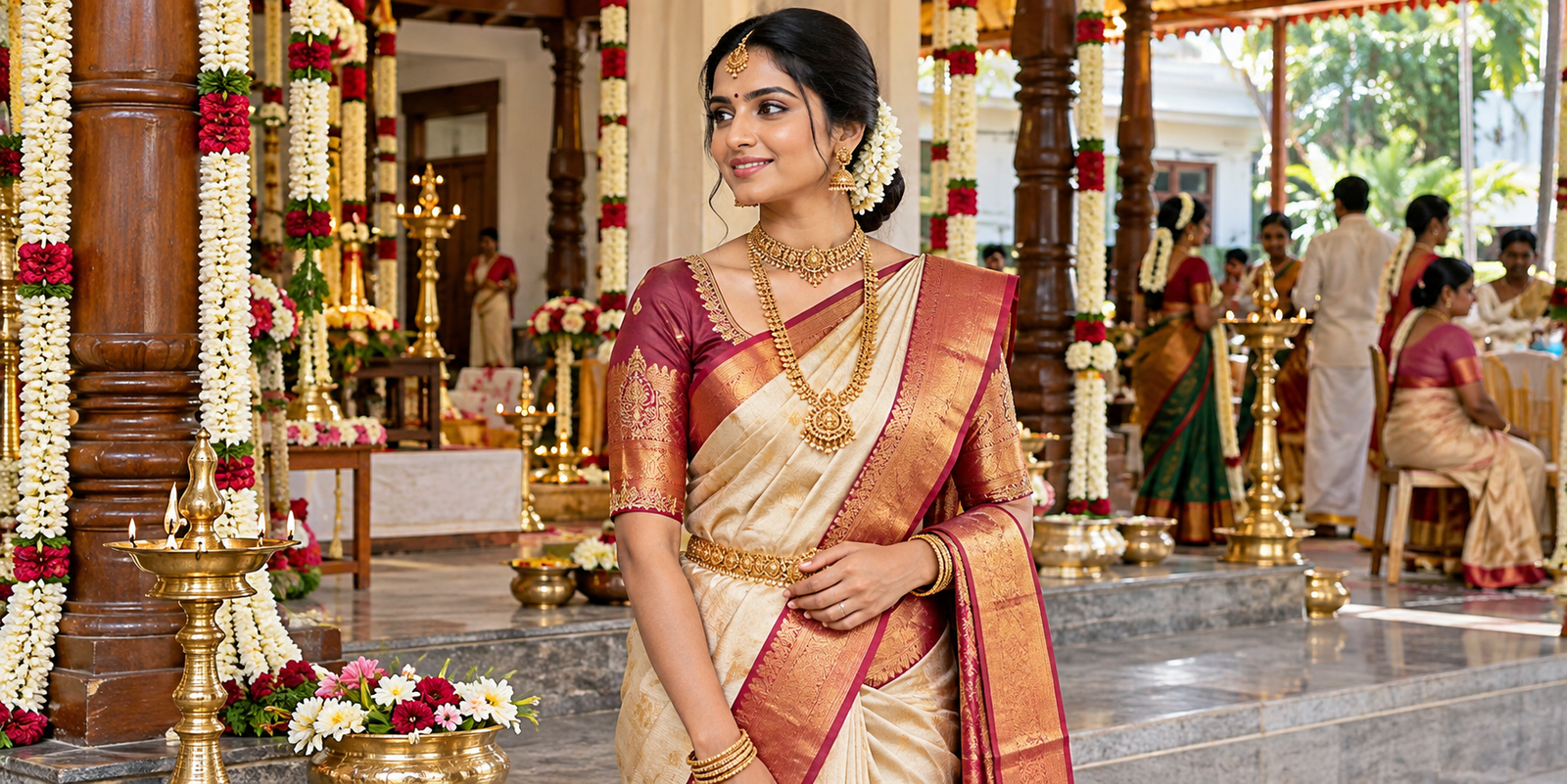
When you are choosing a south indian dress for weddings, the decision usually comes down to tradition, the ceremony, and comfort. Silk sarees, Kasavu drapes, half sarees, and Pattu Pavadai can all work when matched to the occasion.
What Is a South Indian Wedding Dress?
A South Indian wedding dress refers to traditional clothing worn for wedding rituals or celebrations. Sarees are the most familiar choice, but half sarees, Langa Voni, and Pattu Pavadai also suit suitable settings. Dress customs vary by state and community.
For formal rituals, silk and traditional weaves are common. For longer daytime events, lighter outfits may be easier to manage.
Best south indian dress Options for Weddings
Kanjeevaram/Kanchipuram Saree
Kanjeevaram sarees are a classic choice for formal Tamil weddings. Their silk texture, broad borders, and traditional motifs create a ceremonial look. Richer designs suit brides and close family, while simpler versions can suit guests.
Pattu Saree
“Pattu” means silk, so it is a broader term than Kanjeevaram. A Kanjeevaram can be a pattu saree, but not every pattu saree is Kanjeevaram. This distinction helps when comparing sarees.
Kasavu Saree
The Kerala Kasavu saree has a cream or off-white body with a gold-toned border. It suits daytime weddings and pairs naturally with gold jewelry and jasmine flowers.
Half Saree / Langa Voni
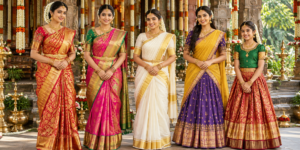
A half saree combines a skirt, blouse, and draped dupatta-like piece. It offers a youthful traditional look and suits younger women or festive functions.
Pattu Pavadai
Pattu Pavadai usually consists of a silk skirt and matching blouse. It is especially common for girls during traditional celebrations.
| Outfit | Best suited for | Key character | Comfort note |
|---|---|---|---|
| Kanjeevaram saree | Bride, close family | Rich and formal | Heavier |
| Pattu saree | Bride, guest, family | Festive silk look | Depends on weave |
| Kasavu saree | Kerala wedding | Elegant and simple | Good for daytime |
| Half saree/Langa Voni | Bridesmaid, younger women | Youthful and traditional | Easier movement |
| Pattu Pavadai | Girls, younger wearers | Festive and coordinated | Good for shorter events |
South Indian Wedding Dress by State
Tamil Nadu is strongly associated with Kanjeevaram silk sarees, Kerala with Kasavu styles, and Karnataka with silk and regional handloom traditions such as Ilkal. Andhra Pradesh is known for silk traditions including Gadwal and Uppada, while Telangana is associated with Pochampally Ikat. These are broad regional associations; families may combine styles freely.
South Indian Wedding Dress for Bride, Bridesmaid & Guests
A bride usually needs the most formal option, often with richer silk, strong borders, and detailed jewelry. A bridesmaid or close family member can choose a lighter silk, half saree, or coordinated outfit. Guests can prioritize comfort, color, and the event schedule.
For multiple functions, avoid choosing one heavy outfit for every event. A practical plan is one statement look for the main ceremony and a lighter option for the reception.
How to Choose a south indian dress
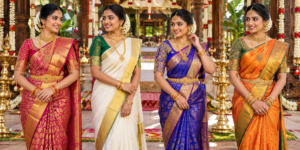
Start with the ceremony, not just the color. Consider:
- Fabric and weight: Richer silk looks formal, while a lighter weave may be easier for long events.
- Draping and movement: Make sure you can sit, walk, and manage stairs comfortably.
- Blouse fit: A well-fitted blouse can improve the overall finish more than extra embellishment.
- Weather and venue: Heat, humidity, and outdoor ceremonies may favor lighter fabrics and breathable linings.
- Dress code and customs: When unsure, ask the host or a close family member what traditional wear is expected.
How to Style a South Indian Wedding Outfit
Blouse and Jewelry
A blouse can match the saree border or create a subtle contrast. Gold-toned jewelry, jhumkas, bangles, a necklace, and a waist belt can build a complete traditional look without making every piece equally heavy.
Hairstyle and Jasmine Flowers
A bun or neatly braided hairstyle works naturally with traditional sarees and gives jasmine flowers a balanced place in the look. Match the flower length to the hairstyle rather than adding more decoration automatically.
Draping
Draping affects both appearance and comfort. Practice the pleats before the event and secure the pallu properly. Comfortable footwear and a few discreet safety pins can make long ceremonies easier.

Traditional vs Modern South Indian Wedding Dresses
Traditional dressing suits ceremonies with strong cultural customs. Modern styling can keep the same base while changing the blouse cut, border scale, jewelry balance, or drape.
A practical middle ground is a traditional silk saree with a contemporary blouse and lighter jewelry. This keeps the cultural character while allowing more personal style.
Conclusion
The right south indian dress for a wedding depends on your role, ceremony, climate, comfort, and preferred level of tradition. Choose the fabric and silhouette first, then build the look with the blouse, jewelry, hairstyle, and flowers. When these elements work together, a simple traditional outfit can look polished and wedding-ready.
