



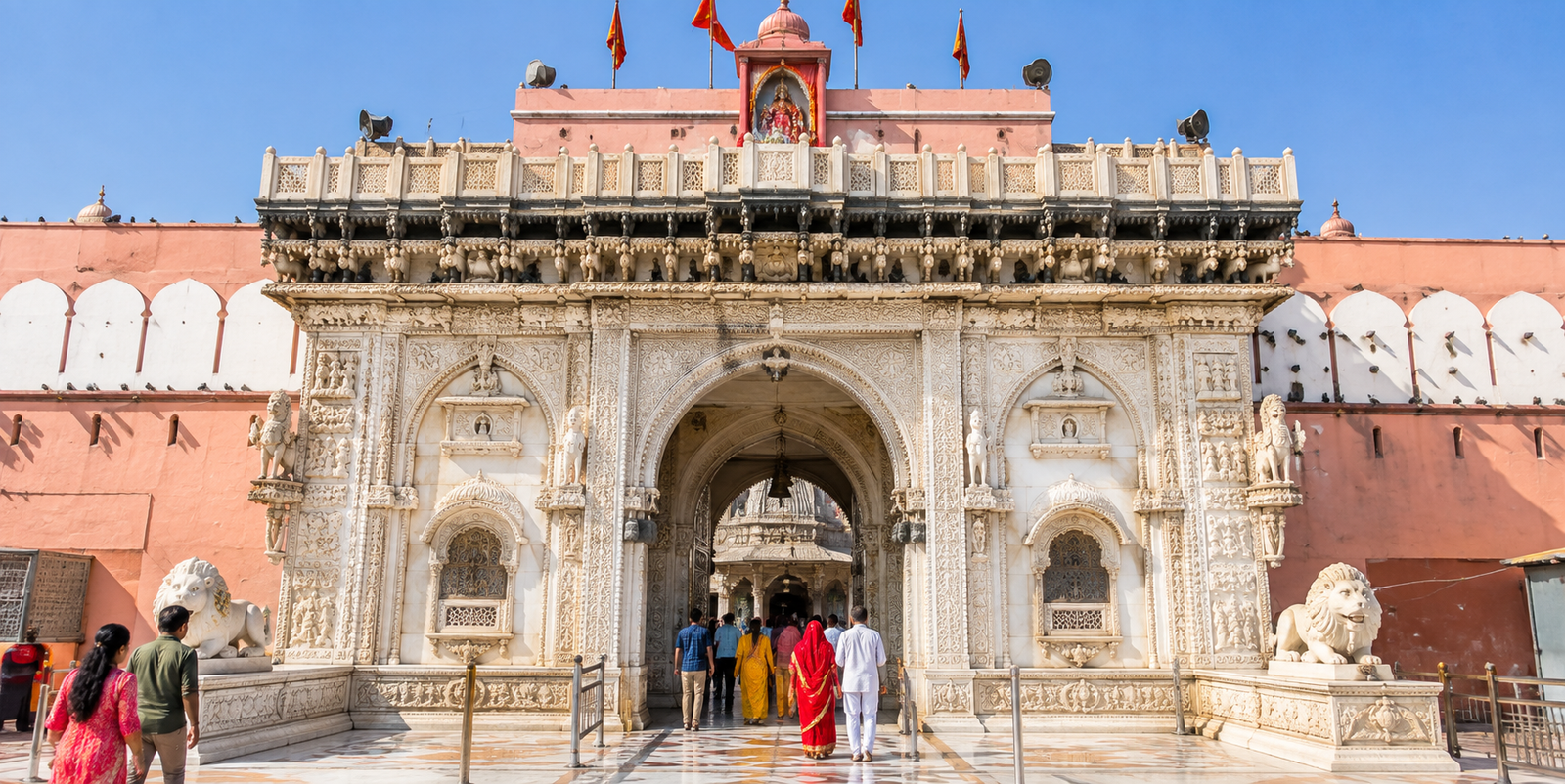
Karni Mata Temple photo searches usually lead visitors to the famous temple at Deshnoke, near Bikaner, Rajasthan. This gallery-first guide helps you understand what the most useful photographs show, from the carved entrance and silver doors to the temple interior, shrine and sacred kabas.
Karni Mata Temple Photo Gallery: What to See
The Karni Mata Temple at Deshnoke is the specific “Rat Temple” associated with Bikaner. Rajasthan Tourism places it about 30 km from Bikaner and describes its marble construction, silver doors, Karni Mata shrine and resident rats.
A useful photo gallery should therefore be organized rather than presented as a random collection. Start with the exterior, then move closer to the entrance, architectural details, interior, shrine and finally the kabas.
Quick facts
| Detail | Information |
|---|---|
| Location | Deshnoke, near Bikaner, Rajasthan |
| Distance | About 30 km from Bikaner |
| Known for | Karni Mata shrine and sacred rats |
| Architecture | Marble facade with ornate detailing |
| Entrance | Decorative silver doors |
| Current listed hours | 4:00 a.m.–10:00 p.m. |
| Entry fee | Rajasthan Tourism currently lists no admission fee |
The listed timings and admission information should still be checked before travelling because visitor arrangements can change.

Entrance, Marble Architecture & Silver Doors
The entrance is one of the strongest subjects for a karni mata temple photo because it combines detailed marble carving with the temple’s distinctive metalwork. Rajasthan Tourism notes that the temple structure is built in marble and features solid silver doors whose panels depict legends associated with Karni Mata.
For a useful architecture gallery, include both a full entrance photograph and close-ups. A wide frame explains the scale; a detail shot lets readers examine carvings, decorative motifs and door panels.
Inside the Temple: Shrine, Courtyard & Devotees
Photographs from inside should show more than simply a crowded room. Look for images that explain the layout, flooring, courtyard spaces and visual relationship between devotees, the shrine and the resident kabas.
The central shrine contains an image of Karni Mata decorated with a crown and garlands; Rajasthan Tourism also describes images of her sisters positioned alongside it.
Photography around worship should remain respectful. Avoid blocking worshippers, interfering with offerings or treating an active religious ceremony like a staged photo session.

Karni Mata Temple Photo Gallery of Rats and White Rats
The resident rats, commonly called kabas, are central to the temple’s visual identity. Rajasthan Tourism and Incredible India describe thousands of rats living freely within the temple and being treated as sacred by devotees.
White rats are particularly important in the religious tradition. Incredible India describes sightings of white rats as especially holy and connected with Karni Mata and her family. This is a matter of religious belief and tradition, not a scientific claim that can be independently established.

Photo Sources, Attribution & Licensing
Do not assume a photograph is free to download or publish just because it appears in Google Images. Original photographs, commercial stock images, Creative Commons files and permission-based images can have completely different usage conditions.
Wikimedia Commons provides useful examples because individual files can display their author and license. For example, some Karni Mata Temple photographs are published under CC BY 4.0, CC BY-SA 4.0 or earlier Creative Commons licenses, while another recent file is released under CC0. Always check the individual file page before reuse.
A good attribution should identify the photographer, source, license and any required changes. Keep the original license information with the image record.
Visitor and Photography Tips
Before taking photographs, follow signs and instructions from temple staff. Give worshippers clear space, avoid intrusive close-ups, and be especially considerate during aarti or festival activity.
For your own travel gallery, capture a mixture of wide and close views: entrance, silver-door details, courtyard, shrine area and kabas. That produces a more informative collection than dozens of similar exterior photographs.
Conclusion
The most useful karni mata temple photo collection is not simply a large folder of pictures. It should help a visitor recognize the Deshnoke temple, understand its marble architecture and silver doors, see the shrine and courtyard, and appreciate why kabas and white rats are important within the temple’s religious tradition. Clear captions, respectful photography and transparent licensing information make the gallery far more useful for travellers and publishers alike.
