


Close Menu

    Subscribe to Updates

    Get the latest creative news from FooBar about art, design and business.

    What's Hot

    Salary Loan vs Personal Loan: What’s the Difference?

    September 28, 2026

    Wireless Charger for Car in India

    September 28, 2026

    25 Best Places to Visit in Singapore: Free & Paid Attractions

    September 23, 2026
    Facebook X (Twitter) Instagram Pinterest
    Trending
    • Salary Loan vs Personal Loan: What’s the Difference?
    • Wireless Charger for Car in India
    • 25 Best Places to Visit in Singapore: Free & Paid Attractions
    • Dandruff Treatment at Home: Easy Step-by-Step Guide
    • Hoodie Shirt for Men: Choose Better, Dress Better
    • Finance Used Cars in India: Loans, EMIs and Eligibility
    • Bus Location Track: How to Track a Bus Live in India
    • Safari World Bangkok Ticket: Price, Types & Booking Guide
    Facebook X (Twitter) Instagram Pinterest
    ThecommonjournalThecommonjournal
    Thecommonjournal
    • Home
    • Lifestyle
    • Fashion
    • Travel
    • Beauty
    • Technology
    ThecommonjournalThecommonjournal
    Home»Technology»Is End-to-End Encryption Completely Secure? What to Know
    Technology

    Is End-to-End Encryption Completely Secure? What to Know

    userBy userSeptember 10, 2026No Comments0 Views
    Facebook Twitter Pinterest LinkedIn WhatsApp Reddit Tumblr Email
    End-to-End Encryption
    Share
    Facebook Twitter LinkedIn Pinterest Email

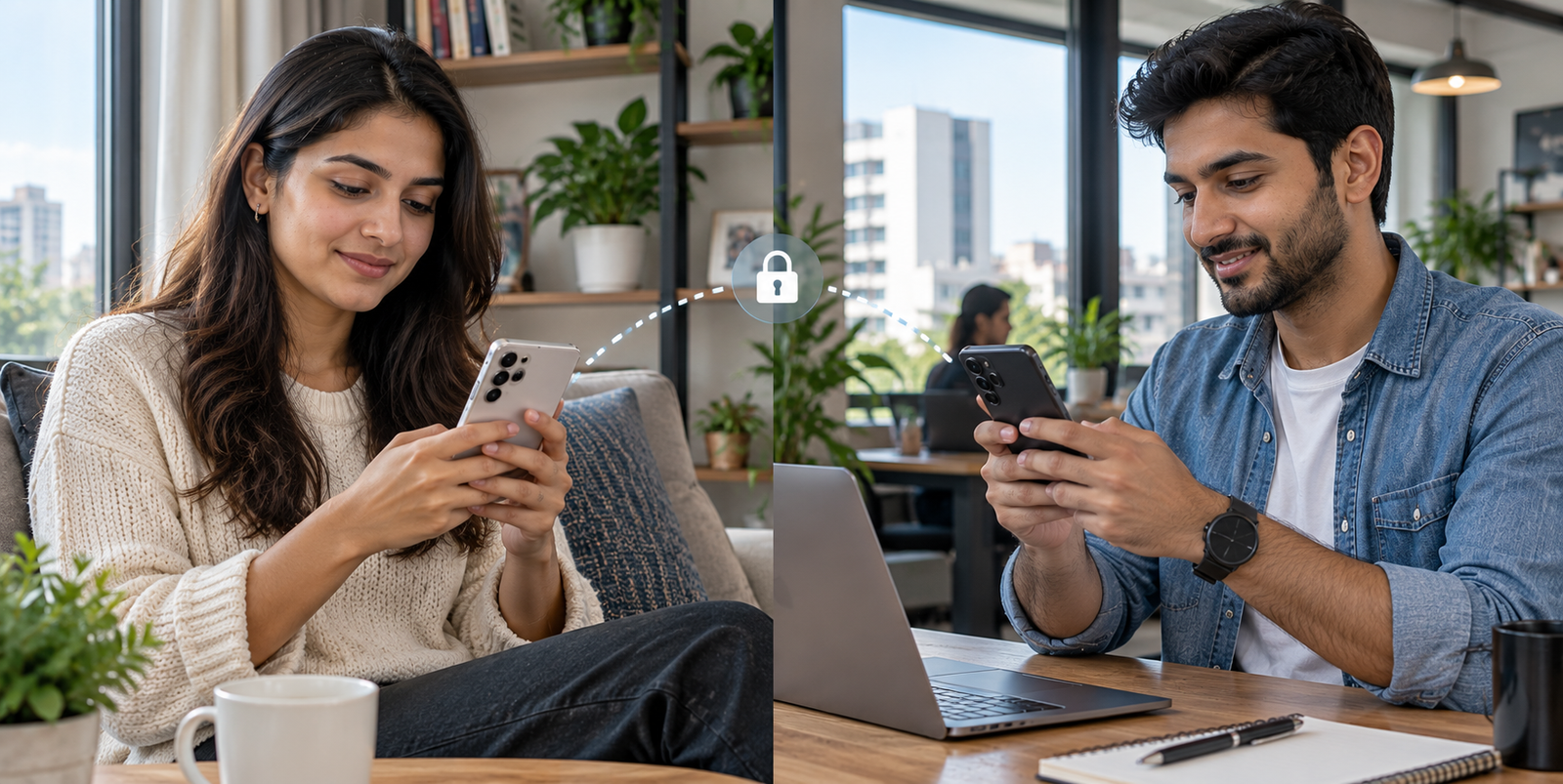
    End-to-end encryption (E2EE) is designed to keep the content of a conversation readable only by the communicating endpoints. That sounds like “completely secure,” but it is more accurate to call E2EE a strong privacy layer, not a complete security system. The important question is what it protects, what it leaves exposed, and how you can verify an E2EE claim.

    Table of Contents

    Toggle
    • What Is End-to-End Encryption?
    • How End-to-End Encryption Works
    • E2EE vs Encryption in Transit: Why TLS Is Different
    • What End-to-End Encryption Protects
    • What End-to-End Encryption Does Not Protect
    • Real-World Examples of E2EE
    • Benefits and Limitations of End-to-End Encryption
    • How to Evaluate an E2EE Claim
    • Conclusion

    What Is End-to-End Encryption?

    E2EE encrypts a message on the sender’s device and keeps it encrypted while it passes through networks and servers. The intended recipient’s device then decrypts it. In a properly designed system, the service carrying the message does not possess the keys needed to read the message content. This is different from simply encrypting data between your device and a server.
    End-to-End Encryption

    How End-to-End Encryption Works

    The basic flow is simple:

    1. Sender: You write a message on your phone.
    2. Encryption: The app converts the readable message into ciphertext using cryptographic keys.
    3. Server: The encrypted message is routed or temporarily queued without exposing the readable content.
    4. Recipient: The recipient’s device receives the encrypted data.
    5. Decryption: The recipient’s device uses the appropriate key material to recover the original message.

    The server can therefore still deliver the message without being able to read its contents. Exact key-management designs vary between services, but the core principle stays the same.

    End-to-End Encryption

    E2EE vs Encryption in Transit: Why TLS Is Different

    TLS protects a connection between endpoints such as your browser and a website server. The server can decrypt the data after receiving it. E2EE extends protection across the communication path so the intermediary service is not supposed to have the keys for the message content.

    That distinction matters when a privacy-sensitive service says “your data is encrypted.” Ask one more question: encrypted where, and who holds the keys?

    What End-to-End Encryption Protects

    The main protection is confidentiality of the message or call content while it travels through the service’s infrastructure. Depending on the implementation, cryptographic authentication and integrity checks can also help detect unauthorized modification.

    However, E2EE does not make every part of a communication invisible. Routing information and other metadata can remain observable. NIST’s definition explicitly notes that routing information can remain visible even when communications are encrypted.

    End-to-End Encryption

    What End-to-End Encryption Does Not Protect

    First, E2EE cannot protect a compromised endpoint. If malware, a malicious app, or an attacker with access to an unlocked phone can see the message after decryption, encryption has already done its job.

    Second, metadata may still reveal useful context, such as identifiers, timing, or delivery information, depending on the service.

    Third, backups need separate attention. A chat can be E2EE during messaging while a backup follows a different protection model. For example, WhatsApp provides an optional end-to-end encrypted backup feature that adds protection to cloud backups.

    Finally, E2EE cannot protect you from the recipient intentionally sharing, photographing, forwarding, or exposing the decrypted content.

    End-to-End Encryption

    Real-World Examples of E2EE

    Signal states that its messages and calls are always end-to-end encrypted and that its service cannot decrypt message content. WhatsApp says personal messages, calls, media, voice messages, and documents are protected by E2EE by default. Google Messages supports E2EE for eligible RCS conversations between Google Messages users; SMS and MMS are not E2EE.

    These examples also show why the words “E2EE” are not enough by themselves. Availability can depend on the conversation type, participating apps, settings, or other conditions. Google Messages, for example, provides encryption only for eligible RCS conversations and offers key verification.

    Benefits and Limitations of End-to-End Encryption

    Benefit or limitation Why it matters
    Privacy Keeps message content away from the service handling delivery.
    Confidentiality Reduces the value of intercepted ciphertext.
    Integrity Authenticated encryption can help detect altered messages.
    Endpoint dependence A compromised phone can expose decrypted content.
    Metadata limits Encryption may not hide who communicates or when.
    Backup considerations Stored copies need their own security controls.

    How to Evaluate an E2EE Claim

    Before trusting an app, look for specific documentation rather than a generic “encrypted” badge. Check whether E2EE is on by default, what types of conversations qualify, how keys are verified, whether backups are separately encrypted, and what metadata the provider retains.

    Independent technical documentation, source-code availability, security audits, or a clear key-verification process can also provide more confidence. Signal explains the use of safety numbers for verification, while Google Messages provides verification options for eligible encrypted conversations.

    Conclusion

    So, is end-to-end encryption completely secure? No. It is one of the strongest ways to protect communication content from intermediaries, but it cannot secure a compromised device, erase metadata, or automatically protect every backup and copy. Treat End-to-End Encryption as a strong layer in a broader security strategy: use reputable software, keep devices updated, protect screen access, review backup settings, and verify the provider’s actual E2EE implementation.

    Is end-to-end encryption safer than normal encryption?
    For private communications, E2EE can provide stronger confidentiality because the service handling delivery is not supposed to have the keys needed to read message content.
    Can hackers break end-to-end encryption?
    Strongly implemented E2EE is designed to resist interception, but attackers may target endpoints, stolen credentials, vulnerable apps, or backups instead of breaking the cryptography itself.
    How can I tell whether an app really uses E2EE?
    Check the provider’s technical documentation for when E2EE applies, how keys are managed or verified, and how backups and metadata are handled. A generic “encrypted” claim is not enough.
    does E2EE protect backups E2EE encryption E2EE security risks end-to-end encryption benefits end-to-end encryption explained end-to-end encryption limitations end-to-end encryption privacy end-to-end encryption security how end-to-end encryption works how to verify end-to-end encryption what is end-to-end encryption
    Share. Facebook Twitter Pinterest LinkedIn Tumblr Telegram Email
    user

    Related Posts

    Wireless Charger for Car in India

    September 28, 2026

    Bus Location Track: How to Track a Bus Live in India

    September 22, 2026

    Hair Dryer Brush vs Thermal Brush: What’s the Difference?

    September 21, 2026
    Leave A Reply Cancel Reply

    Demo
    Top Posts

    Formal Shirt for Men for Office and Business Wear

    July 21, 202616

    10 Best Delhi Tourist Places for an Unforgettable Trip

    July 21, 202610

    Ultimate Taj Mahal Guide: Save Time, Money & Avoid Crowds

    August 7, 20268

    5 Best Facewash Tips for Clear and Healthy Skin Today

    July 21, 20265
    Don't Miss
    Lifestyle
    Lifestyle By user

    Salary Loan vs Personal Loan: What’s the Difference?

    By user0 Lifestyle

    Salary loan usually refers to short-term borrowing based on your salary, but it is not…

    Wireless Charger for Car in India

    September 28, 2026

    25 Best Places to Visit in Singapore: Free & Paid Attractions

    September 23, 2026

    Dandruff Treatment at Home: Easy Step-by-Step Guide

    September 23, 2026
    Stay In Touch
    • Facebook
    • Twitter
    • Pinterest
    • Instagram
    • YouTube
    • Vimeo

    Subscribe to Updates

    Get the latest creative news from SmartMag about art & design.

    Thecommonjournal
    About Us
    About Us

    Your source for the lifestyle news. This demo is crafted specifically to exhibit the use of the theme as a lifestyle site. Visit our main page for more demos.

    We're accepting new partnerships right now.

    Email Us: info@thecommonjournal.com
    Contact: +1-320-0123-451

    Facebook X (Twitter) Pinterest YouTube WhatsApp
    Our Picks

    Salary Loan vs Personal Loan: What’s the Difference?

    September 28, 2026

    Wireless Charger for Car in India

    September 28, 2026

    25 Best Places to Visit in Singapore: Free & Paid Attractions

    September 23, 2026
    Most Popular

    Formal Shirt for Men for Office and Business Wear

    July 21, 202616

    10 Best Delhi Tourist Places for an Unforgettable Trip

    July 21, 202610

    Ultimate Taj Mahal Guide: Save Time, Money & Avoid Crowds

    August 7, 20268
    © 2026 The Common Journal. All Rights Reserved. Designed by Creative Mind .
    • Home
    • Politics
    • Lifestyle
    • Science
    • Buy Now

    Type above and press Enter to search. Press Esc to cancel.

    English
    Arabic