



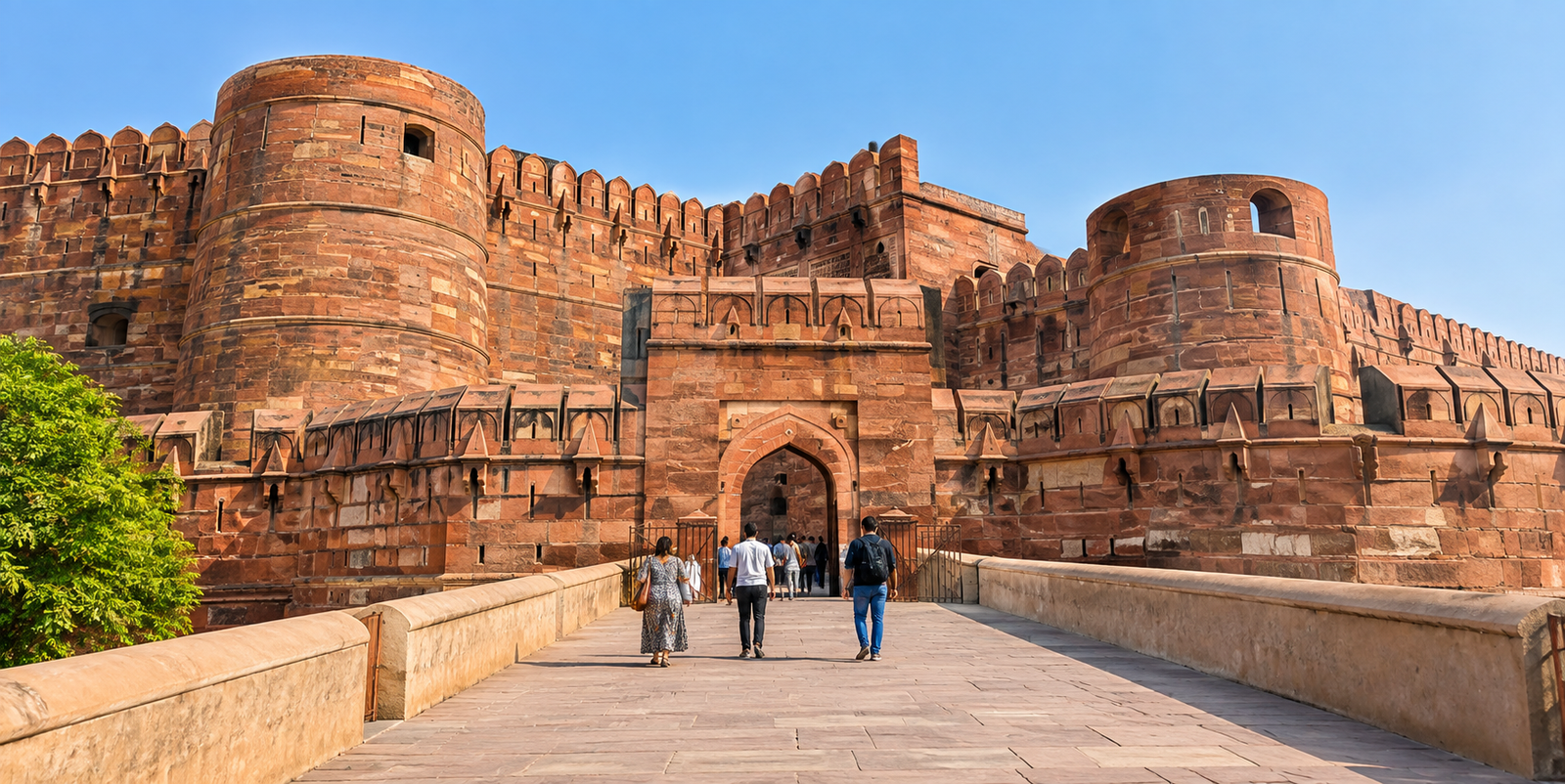
Agra Ka Kila is more than a red-sandstone fort near the Taj Mahal. It was the fortified imperial city of the Mughal rulers and later became closely tied to Shah Jahan’s final years. For a first visit, know what remains open, which buildings matter most, and how to fit the fort into your Agra plan.
What Agra Ka Kila Is and Where It Is Located
Agra Ka Kila, also called Agra Fort, stands on the Yamuna River in Agra, Uttar Pradesh. Its enclosure stretches for about 2.5 km and contains palaces, audience halls, mosques and courtyards rather than one single fort building. It is close to the Taj Mahal, so the two monuments can be combined in one sightseeing plan.
Agra Ka Kila History: From Akbar to Shah Jahan
Emperor Akbar rebuilt the fort in red sandstone from 1565, turning the site into a major Mughal imperial centre. Shah Jahan later changed much of its royal architecture, adding and rebuilding sections in white marble.
That explains the contrast between imposing defensive walls and refined palace spaces. Shah Jahan’s story is especially important here. After Aurangzeb took power in 1658, Shah Jahan was confined in Agra Fort and spent his final years there. The Musamman Burj is associated with this period and faces toward the Taj Mahal across the Yamuna.

Agra Ka Kila Architecture and Major Features
The architecture combines military planning with royal design. Massive red-sandstone walls, bastions and gateways create the outer character. Inside, surviving Mughal buildings use courtyards, arcades, carved marble, jali screens, domes, chhatris and ornamental inlay.
The ramparts served protection, while the palace buildings supported administration, ceremony, private life and river views. This makes Agra Fort feel more like a walled city than a simple military stronghold. UNESCO describes the complex as an important expression of Mughal art and architecture, shaped by Indian traditions alongside Persian influences.
Famous Buildings Inside Agra Ka Kila
Jahangir Mahal is one of the major palace buildings associated with the Akbari phase. Diwan-i-Aam was used for public audiences, while Diwan-i-Khas was intended for private imperial meetings. Khas Mahal is known for refined marble detailing, and Sheesh Mahal for decorative mirror work.
The Musamman Burj is especially meaningful because it links the fort’s history with a view toward the Taj Mahal.

UNESCO World Heritage Significance
Agra Fort was inscribed on the UNESCO World Heritage List in 1983. UNESCO recognizes it as an important 16th-century Mughal monument whose 2.5-km enclosure contains the imperial city, including palaces, audience halls and mosques. Its significance also comes from Mughal architecture shaped by local Indian traditions alongside Persian and other influences.
Timings, Entry Fee and How to Reach
Agra Fort is open from sunrise to sunset, approximately 6:00 AM to 6:00 PM, every day. The published standard fee is ₹50 for Indian visitors, ₹90 for SAARC/BIMSTEC visitors and ₹650 for other foreign visitors. The official ticketing page lists Friday rates of ₹40 for Indians and ₹600 for foreign visitors. Children below 15 years enter free. Check the official ticket portal before travelling because heritage fees can change.
| Visitor category | Published entry fee |
|---|---|
| Indian | ₹50 |
| SAARC/BIMSTEC | ₹90 |
| Other foreign visitors | ₹650 |
| Children below 15 | Free |
Visitors enter through Amar Singh Gate. The Delhi Gate is not the regular tourist entrance. Agra Fort is about 2.5 km from the Taj Mahal, and the Agra Fort railway and metro stations are nearby, so local transport, taxis and autos are practical options.
Practical Visit Tips
Plan around two to three hours if you want to see the main palace buildings without rushing. Early morning or late afternoon is generally more comfortable for walking, especially in hot weather. Wear practical footwear because the visit includes ramps, courtyards and uneven heritage surfaces.
A simple budget approach is to use the official entry ticket and pay for a licensed guide only when you want deeper historical context. Carry water, keep your ID with you, and avoid large bags that can slow security checks. Do not climb barriers or touch carved surfaces; responsible sightseeing helps protect the monument.
Conclusion
Agra Ka Kila is worth visiting for more than its red walls. Its appeal is the story of Akbar’s fortress, Shah Jahan’s marble additions, surviving imperial buildings and its connection to the Taj Mahal. For a practical visit, check the latest ticket information, enter through Amar Singh Gate, allow two to three hours, and focus on the palace quarter and Musamman Burj.
