











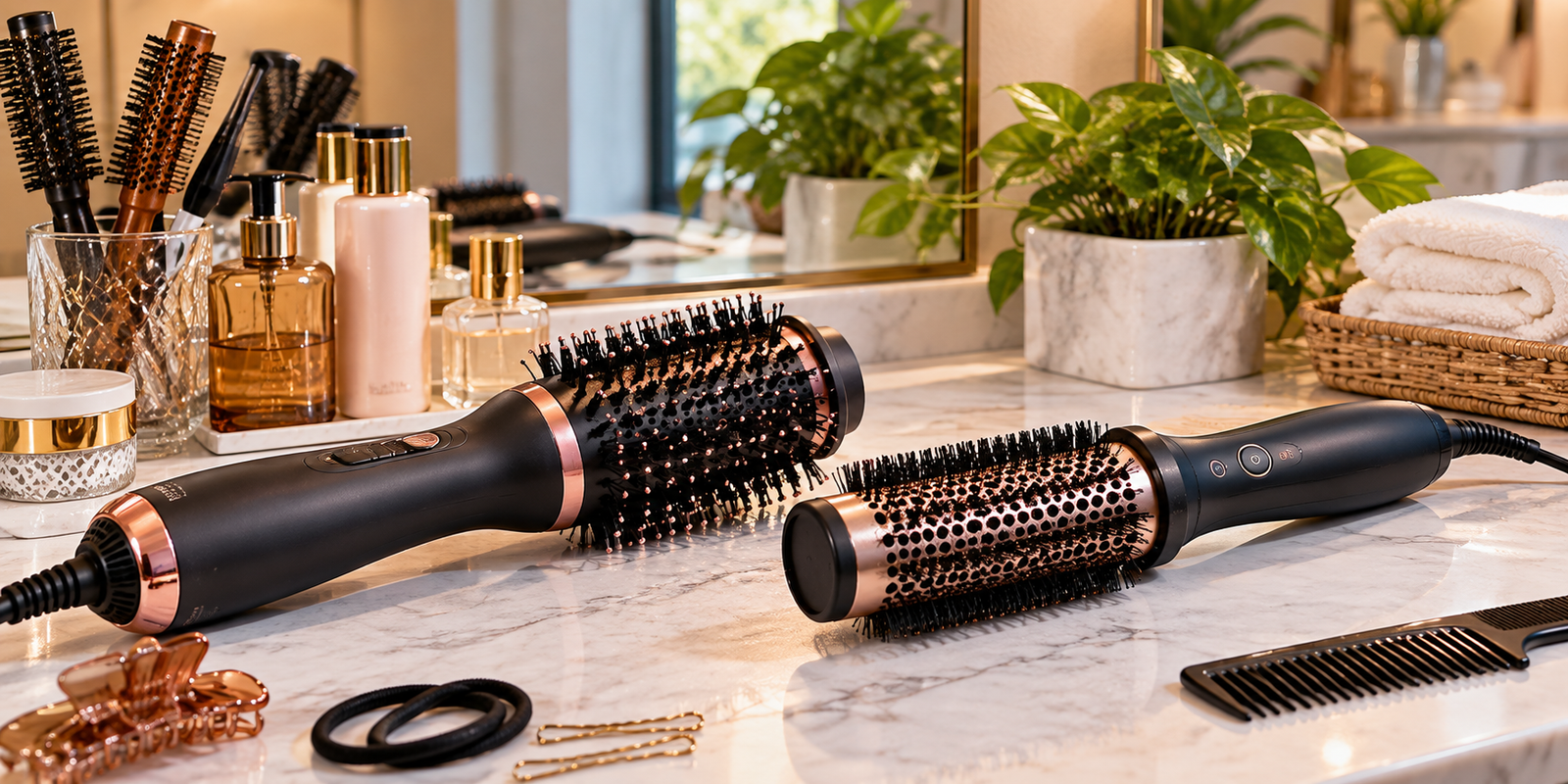
Hair dryer brush is often mistaken for a thermal brush, but they solve different styling needs. A hair dryer brush uses heated airflow to dry and shape damp hair, while a thermal brush uses a heated surface to style hair that is already dry.
What Is a Hair Dryer Brush and How Does It Work?
A hair dryer brush, also called a hot air brush or blow-dry brush, combines a brush with heated airflow. It is made for damp or towel-dried hair, so it can remove moisture while shaping the hair.
You section the hair, place the brush under or over a section, then glide it through while the airflow dries the strands. Depending on the design, the result can be smooth, lifted, rounded, or softly wavy.
What Is a Thermal Brush and How Does It Work?
A thermal brush heats its barrel or styling surface but does not blow air. It is primarily a dry-hair styling tool, so the hair should be fully dry before use.
It can refresh flat roots, smooth frizz, turn ends inward or outward, and add soft bends or volume. Barrel size also affects the finish, with smaller barrels suited to tighter movement and larger barrels suited to broader volume.

Hair Dryer Brush vs Thermal Brush: Key Differences
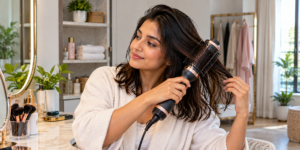
The simplest distinction is drying versus styling. A hair dryer brush is part of the drying stage. A thermal brush comes after drying.
| Feature | Hair Dryer Brush | Thermal Brush |
|---|---|---|
| Airflow | Yes | No |
| Starting hair | Damp or towel-dried | Fully dry |
| Main purpose | Dry and style | Shape and refresh |
| Best use | Blowouts | Dry-hair finishing |
| Routine | Wash day | Touch-ups |
With a hair dryer brush, you remove excess water and section the hair, then combine drying and styling. With a thermal brush, drying must already be complete, so it is often more useful for second-day hair.
A dryer brush shapes hair as it dries. A thermal brush gives more control for dry roots, bangs and ends.

Which Tool Fits Your Hair Type and Length?
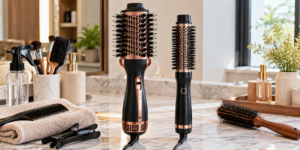
Your texture, density and length should guide the choice.
- Fine hair: Adjustable heat is useful. A dryer brush can add lift during drying, while a thermal brush can refresh flat roots.
- Thick hair: A dryer brush can simplify wash-day styling, but smaller sections may be needed. A thermal brush helps with smoothing after drying.
- Short hair: A smaller barrel or compact brush gives better control around layers and bangs.
- Long hair: A larger brush surface handles broader sections and creates fuller movement. A thermal brush can refresh lengths and ends.
- Wavy or curly hair: A dryer brush can stretch and smooth hair while drying. A thermal brush is better for dry finishing.
Match the tool to the result too. Pick a dryer brush for a full blowout from damp hair; pick a thermal brush for dry volume, smoothing, bends or quick reshaping.


Heat Settings, Heat Exposure and Hair Care
More heat is not automatically better. Use the lowest effective temperature for your hair and the style you want, following the tool’s instructions.
Work in sections, keep the brush moving, and avoid repeated passes over already-dry hair. A suitable heat protectant can also be part of a heat-styling routine.
When comparing models, check heat settings, airflow levels, bristle design, barrel size and a cool-shot function. These features affect control and finish.

Advantages, Limitations and How to Choose
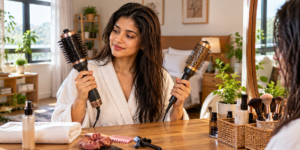
A hair dryer brush’s biggest advantage is convenience. It can dry and shape damp hair in one routine and is useful for at-home blowouts. It may be less useful for small dry-hair touch-ups.
A thermal brush helps with dry-hair maintenance. It can refresh volume, smooth sections and reshape ends without repeating the drying process. It does not replace a hair dryer.
Use this decision guide:
- Choose a hair dryer brush when your hair is damp and you want drying plus styling.
- Choose a thermal brush when your hair is dry and you want reshaping, smoothing or volume.
- Choose a smaller barrel for tighter bends and detailed areas.
- Choose a larger barrel for broader volume and looser movement.
- Prioritize adjustable heat when you want more control over heat exposure.
Conclusion
A hair dryer brush and a thermal brush are not interchangeable. One combines airflow, drying and styling, while the other focuses on shaping already-dry hair. Think about your starting point, hair length, density, desired finish, and drying needs. That makes the choice between a hair dryer brush and thermal brush much clearer.


