











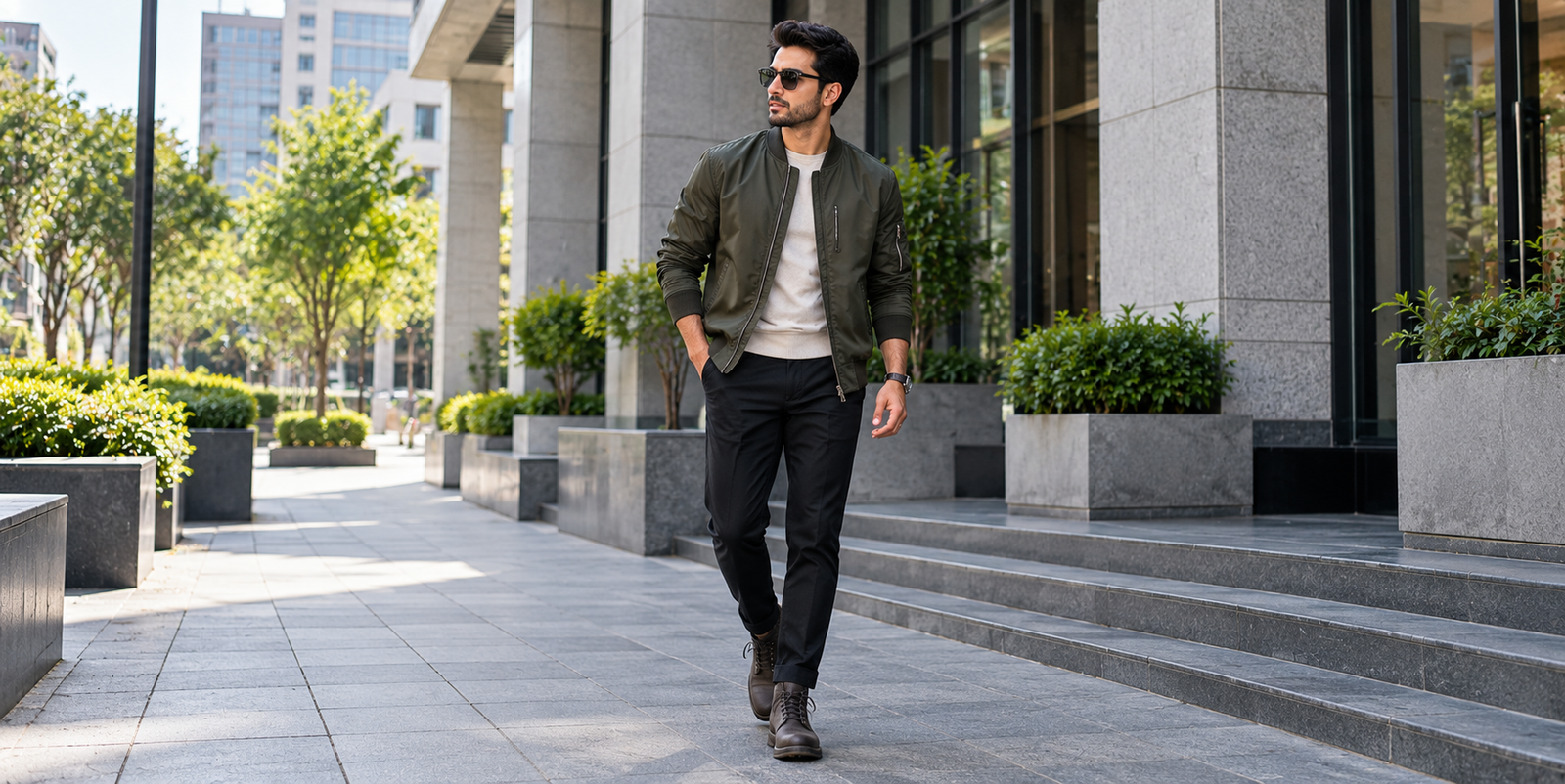
Bomber jacket men styles now range from lightweight flight-inspired shells to leather and insulated layers. The right choice depends on fit, climate, material, and how you plan to wear it—not simply on appearance.
What Makes a Bomber Jacket?
A bomber jacket is usually short, ending around the waist or upper hip, with a front closure and ribbed cuffs and hem. Modern versions vary in collar and fabric.
Its roots are in military flight clothing. The A-1 came before the zippered A-2; B-15 and MA-1 later shaped the short flight-jacket silhouette. The Smithsonian records the A-2 as a 1931 development of the A-1, while U.S. Air Force historical material identifies the B-15 as an intermediate flight jacket.
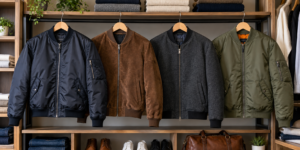
Common choices include MA-1-style nylon, leather, suede, cotton, wool, insulated, shearling, and relaxed or oversized designs.


Types, Materials and Seasons
| Material | Strength | Best Weather/Season | Best Use |
|---|---|---|---|
| Nylon/polyester | Lightweight | Mild weather, wind, light moisture | Everyday, travel |
| Leather | Structured, durable | Cool, dry weather | Smart casual, date night |
| Suede | Soft, refined | Mild, dry weather | Refined casual |
| Cotton | Breathable | Spring, summer evenings | Casual |
| Wool | Warm | Autumn and winter | Smart casual |
| Quilted/insulated | Very warm | Winter | Commuting, cold days |
| Shearling | Heavy warmth | Very cold weather | Winter layering |
Water-resistant is not the same as waterproof. A treated shell may handle light moisture, but heavy rain needs stronger protection. Check the construction rather than assuming every bomber is weatherproof. Nylon and polyester are commonly used when low weight and practical everyday wear matter, while leather, suede and wool change the jacket’s structure, texture and maintenance needs.

Finding the Right Fit
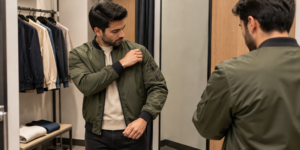
Fit matters more than the brand. Shoulders should sit near the natural line. Zip the jacket and check the chest for pulling. Sleeves should reach the wrist, and the hem should sit naturally around the waist or upper hip.
Regular fit is the most versatile. Slim fit looks neater but leaves less room. Relaxed fit gives movement and works over knitwear. Oversized fit creates a stronger fashion silhouette, so cleaner trousers can balance it.
Try the jacket over the layer you expect to wear. Raise your arms, sit down, zip it fully and check the cuffs and hem. Leather deserves extra attention because its structure is less forgiving of a poor fit.
Pre-purchase Fit Checklist
Check the shoulders, chest, sleeve length, hem comfort and room for planned layers.

Styling and Occasion Guide
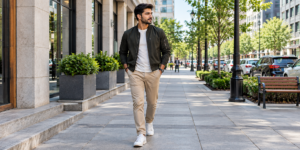
For everyday wear, pair a bomber with a T-shirt, jeans and sneakers. A shirt and chinos create smart casual. A leather or suede bomber with a plain knit, dark jeans and boots suits a date night. A minimal bomber can work for a relaxed office.
For travel, lightweight nylon is easy to layer. Cotton or classic flight-style nylon suits weekends. Tailored trousers can pair with a restrained bomber.
Black, olive and navy are versatile. Brown suits suede and leather; brighter shades make the jacket the statement.
Which Bomber Is Right for Me?
| Need | Start With | Why |
|---|---|---|
| One everyday jacket | Nylon/polyester, regular fit | Light, versatile and easy to layer |
| Cold weather | Wool or insulated | Better warmth and layering |
| Smart-casual outfits | Leather, suede or wool | More refined texture and structure |
| السفر | Lightweight nylon/polyester | Easier to carry and layer |
| Modern streetwear | Relaxed or oversized nylon/cotton | More volume and visual impact |
Material × Season × Occasion Matrix
| Material | Season | Occasion |
|---|---|---|
| Nylon | Spring/fall | Everyday, travel |
| Leather | Fall/winter | Date night, smart casual |
| Suede | Mild, dry | Refined casual |
| Wool | Fall/winter | Smart casual, office |
| Quilted | Winter | Commuting, everyday |

Buying, Value and Care
Check fit, fabric, lining, insulation, zipper, hardware, cuffs, hem, pockets, weather protection and construction.
Cost should be judged against construction, not an arbitrary price point. A lightweight bomber can be good value when its fabric, seams and hardware match its purpose. A higher-cost jacket should justify its materials and construction.
Follow the care label first. Nylon and cotton may be easier to clean, while leather and suede need specific care. Wool and insulated jackets may need gentler cleaning. Keep leather and suede away from moisture.
Conclusion
The right bomber jacket men choice should match your climate, preferred fit, wardrobe and occasions. Start with regular fit and a versatile colour for maximum use; choose lighter materials for transitional weather, insulation for cold conditions, and leather or suede when texture and a refined appearance matter most.


