











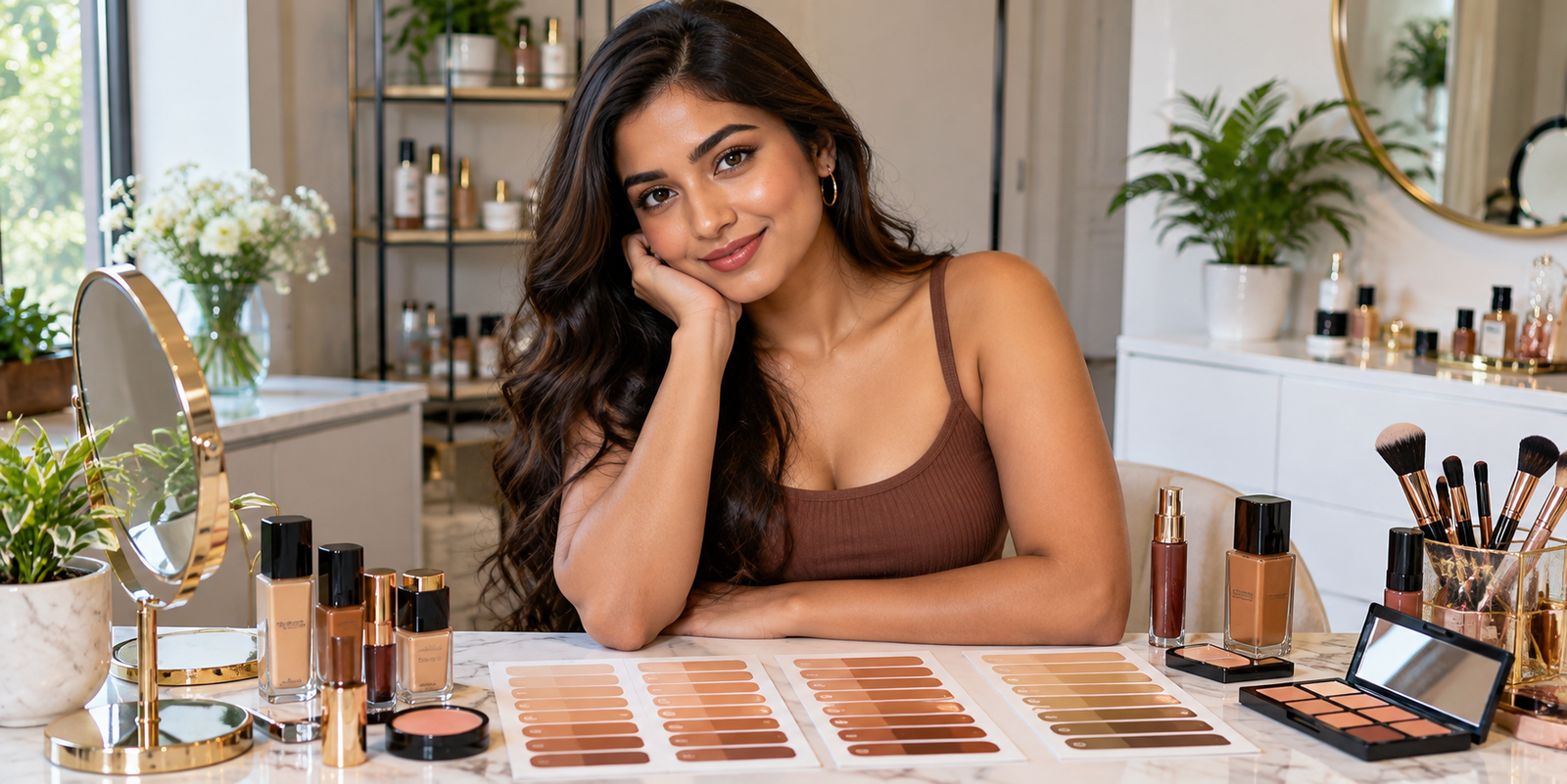
Dusky skin tone can describe a range of medium-to-deep brown complexions, so the label alone cannot tell you which shades will suit you. Start by separating skin depth from undertone. Depth describes how light or deep the complexion appears, while undertone describes its warm, cool, neutral, or olive direction.
What Dusky Skin Tone Means
“Dusky” is a common beauty and fashion description for brown complexions across a medium-to-deep range. It is not an undertone category or one fixed shade. Two people described as dusky can have different undertones, so one colour list may not suit everyone.
Dusky Skin Tone vs Undertone
| Check | Meaning | Why it matters |
|---|---|---|
| Skin depth | How light, medium, tan, or deep the complexion appears | Narrows the shade range |
| Undertone | Warm, cool, neutral, or olive colour direction | Guides colour families |
| Surface changes | Tan, redness or pigmentation | Changes how a shade may appear |
A foundation can match your depth but still look orange, pink, grey, or dull. Undertone matching helps prevent this.


How to Identify Your Undertone
Use several clues in natural or neutral light:
- Warm: golden, yellow or peach cast; green-looking veins and gold jewellery may support the match.
- Cool: pink, red or bluish cast, blue or purple-looking veins and silver jewellery may support it.
- Neutral: warm and cool signs appear more balanced.
- Olive: a muted green or green-gold cast can appear, and standard warm or cool foundations may both seem slightly off.
These are clues, not rules. Confirm the result with jawline and neck swatches in natural light. Foundation labels also vary between brands.
Foundation and Concealer Matching
Estimate your skin depth, then compare nearby shades with the right undertone. Swatch two or three options along the jawline toward the neck. The better match should blend without a visible pink or yellow edge.
For concealer, decide whether you need matching or brightening. A close match works for spot concealing. A modestly lighter shade can brighten the under-eye, but going much lighter may look grey or ashy. For pigmentation, correct only where needed before concealing.


Best Colours for Dusky Skin Tone
There is no single “best” palette. Start with undertone, then consider colour intensity and the occasion.
Makeup colour families
Warm: terracotta, caramel, coral, copper, bronze, brick red and warm nude.
Cool: berry, plum, wine, mauve, blue-red and cooler pinks.
Neutral: balanced rose, neutral brown, soft berry and versatile reds.
Olive: olive, khaki, muted bronze, brick, brown-red and balanced neutrals.
For blush, choose enough pigment to remain visible without looking chalky. Bronze, copper, cocoa, plum and deep taupe are useful eyeshadow starting points. Highlighter should blend with the complexion.
Lipstick follows the same logic. Richer reds, terracotta, berry, wine and deeper nudes are useful starting points, while very pale nudes should be tested rather than assumed universal


Clothing and jewellery colours
Warm undertones can try rust, mustard, olive, warm cream, chocolate and coral. Cool undertones can test emerald, navy, cobalt, burgundy, magenta and crisp white. Neutral and olive undertones can compare both families.
Gold is a useful starting point for warm colouring; silver may suit cool colouring. Neutral skin can test both. For everyday wear, use comfortable neutrals and medium-intensity shades. Festive or bridal looks can use richer contrast, jewel tones, deep reds or metallic details.
Common Makeup Mistakes to Avoid
Common problems come from choosing by depth alone:
- Foundation that is too light can look grey or disconnected from the neck.
- A wrong undertone can create an orange, pink or dull finish.
- Very pale nude lipstick can look washed out.
- Too much brightening concealer can leave a visible light patch.
- Yellow bathroom lighting can distort shade appearance.
Check products in daylight or neutral lighting before buying.


Quick Shade-Selection Checklist
Before buying a shade, check:
- My approximate skin depth and undertone.
- Whether the foundation blends into my jaw and neck.
- Whether the concealer is matching, brightening or correcting.
- Whether the shade still looks right in neutral or daylight lighting.
- The actual swatch, not only the shade name.
Conclusion
A practical dusky skin tone match starts with two questions: how deep is the complexion, and what is the undertone? Once those are clear, foundation, concealer, lipstick, blush, eyeshadow, highlighter and clothing colours are easier to narrow down. Test nearby shades in natural light and choose what blends with the whole complexion instead of relying on a universal “dusky” shade.


