












Diet plan for weight loss should be practical enough to follow on ordinary working days, weekends, and social occasions. A successful approach is not about eliminating every carbohydrate or surviving on salads. Instead, it focuses on balanced meals, sensible portions, nutritious ingredients, and habits you can maintain over time.
There is no single diet that works perfectly for everyone. A suitable plan should help you manage overall calorie intake while still providing protein, fibre, vitamins, minerals, and enough food to keep meals satisfying. NHS guidance similarly recommends choosing an eating pattern that supports calorie reduction while remaining healthy and realistic for everyday life.
For an Indian household, this can be surprisingly simple. Dal, roti, rice, vegetables, curd, eggs, paneer, beans, chicken, fish and seasonal fruits can all be part of a sensible weight-management routine.
What Makes a Diet Plan for Weight Loss Effective
The foundation is consistency. Rather than following an extremely restrictive menu for a few days, build meals around foods that are nutritious, filling, and easy to prepare.
A simple meal might include dal, two rotis, mixed vegetables and curd. Another option could be grilled chicken, rice and a large salad. For breakfast, eggs with whole-grain toast and fruit can be more practical than relying on packaged “diet” products.
Weight loss generally requires consuming fewer calories than your body uses. However, that does not mean you need to remove entire food groups. Portion sizes, cooking methods, drinks, snacks, and overall food quality all contribute to your daily intake.
Build Balanced Meals
Prioritize Protein
Include a protein source with each main meal. Useful choices include eggs, fish, chicken, paneer, tofu, curd, dal, rajma, chana and other pulses.
Protein can help meals feel more satisfying. It is particularly useful when combined with vegetables and an appropriate portion of carbohydrates.
Add More Vegetables
Vegetables provide fibre, vitamins, and minerals while generally adding relatively few calories. A useful approach is to make vegetables a substantial part of lunch and dinner.
For example, pair roti with bhindi and dal, add mixed vegetables to a rice-and-chicken meal, or include cucumber, tomato and leafy greens alongside your main dish. NHS guidance recommends making vegetables a significant part of the main meal, with roughly half the plate coming from vegetables.


Choose Better Everyday Foods
A good diet plan for weight loss does not require expensive supplements, imported “superfoods,” or specialized meal-replacement products. Start with ordinary foods that are easy to purchase and prepare.
Useful staples include oats, whole-wheat atta, brown or regular rice in controlled portions, dal, beans, eggs, paneer, tofu, curd, chicken, fish, vegetables, fruit, nuts and seeds.
You should also pay attention to drinks. Water is an excellent everyday choice. Unsweetened tea or coffee can fit into a balanced routine, while sugary beverages, sweetened shakes and frequent high-calorie coffees can make calorie control harder.

Control Portions Without Extreme Restriction
Even nutritious foods can contribute excess calories when portions are consistently too large. Therefore, portion control is one of the most practical skills to develop.
Use a regular plate, measure calorie-dense ingredients such as oil and ghee, and serve snacks into a bowl instead of eating directly from the packet. You can also slow down during meals and reduce distractions, making it easier to recognize when you are comfortably full.
A simple plate structure can help: make vegetables the largest section, include a clear protein source, and add a moderate portion of rice, roti, potatoes or another carbohydrate.
You do not need to weigh every food forever. However, measuring portions for a short period can help you understand how much you are actually eating.


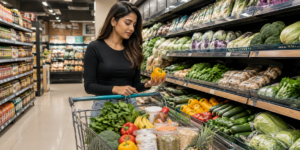
Plan Your Weekly Grocery Shopping
If you want to follow a diet plan for weight loss consistently, your grocery basket should support the plan.
Before shopping, decide which breakfasts, lunches and dinners you are likely to prepare. Then buy the ingredients required for those meals instead of filling the kitchen with highly processed snacks.
| Food Group | Practical Choices |
|---|---|
| Protein | Eggs, chicken, fish, paneer, tofu, curd, dal, chana |
| Vegetables | Spinach, carrots, cucumber, tomato, beans, cauliflower |
| Fruit | Apple, orange, guava, banana, berries |
| Carbohydrates | Oats, rice, potatoes, whole-wheat atta |
| Healthy fats | Nuts, seeds, measured cooking oils |
Frozen vegetables and convenient ingredients can also be useful when your schedule is busy. The objective is not perfect meal preparation; it is making healthier choices easier when hunger arrives.


Make Healthy Eating Sustainable
The best plan is one you can continue after the initial motivation disappears. Allow some flexibility for restaurants, celebrations and weekends rather than treating one higher-calorie meal as failure.
If you eat a heavier dinner, simply return to your usual routine at the next meal. Avoid compensating by starving yourself the following day.
Regular physical activity can complement dietary changes. Walking, cycling, strength training, swimming, yoga or recreational sports can all contribute to an active lifestyle. Adults are generally advised to include regular moderate physical activity, although the appropriate amount varies by person and goal.


Common Mistakes to Avoid
Avoid crash diets, detox products, extreme fasting schedules, and plans promising dramatic weight loss within a few days. Such approaches can be difficult to maintain and may not provide balanced nutrition.
Another common mistake is copying someone else’s calorie target. Energy requirements differ according to factors such as body size, age, activity level and health status.
If you have a medical condition, follow a medically prescribed diet, take medication that may be affected by dietary changes, are pregnant, or have a current or previous eating disorder, seek advice from a qualified healthcare professional before making significant changes.
Conclusion
A practical diet plan for weight loss is not about eating as little as possible. It is about making better decisions consistently: build balanced plates, prioritize protein, increase vegetables, manage portions, plan your groceries, and stay physically active.
Most importantly, choose an approach that fits your lifestyle. Sustainable progress comes from habits you can repeat for months, not extreme rules you can follow for only a few days.


